
Steve's Cheese · an independent guide
Cheese Guide: Styles, Boards and Pairings
Learn the six families every cheese belongs to, plan a board that actually balances, and match it with wine, beer, cider or something alcohol-free. Plain answers, no shop talk.
The six families
Six Cheese Styles Explain Almost Every Wedge on the Counter
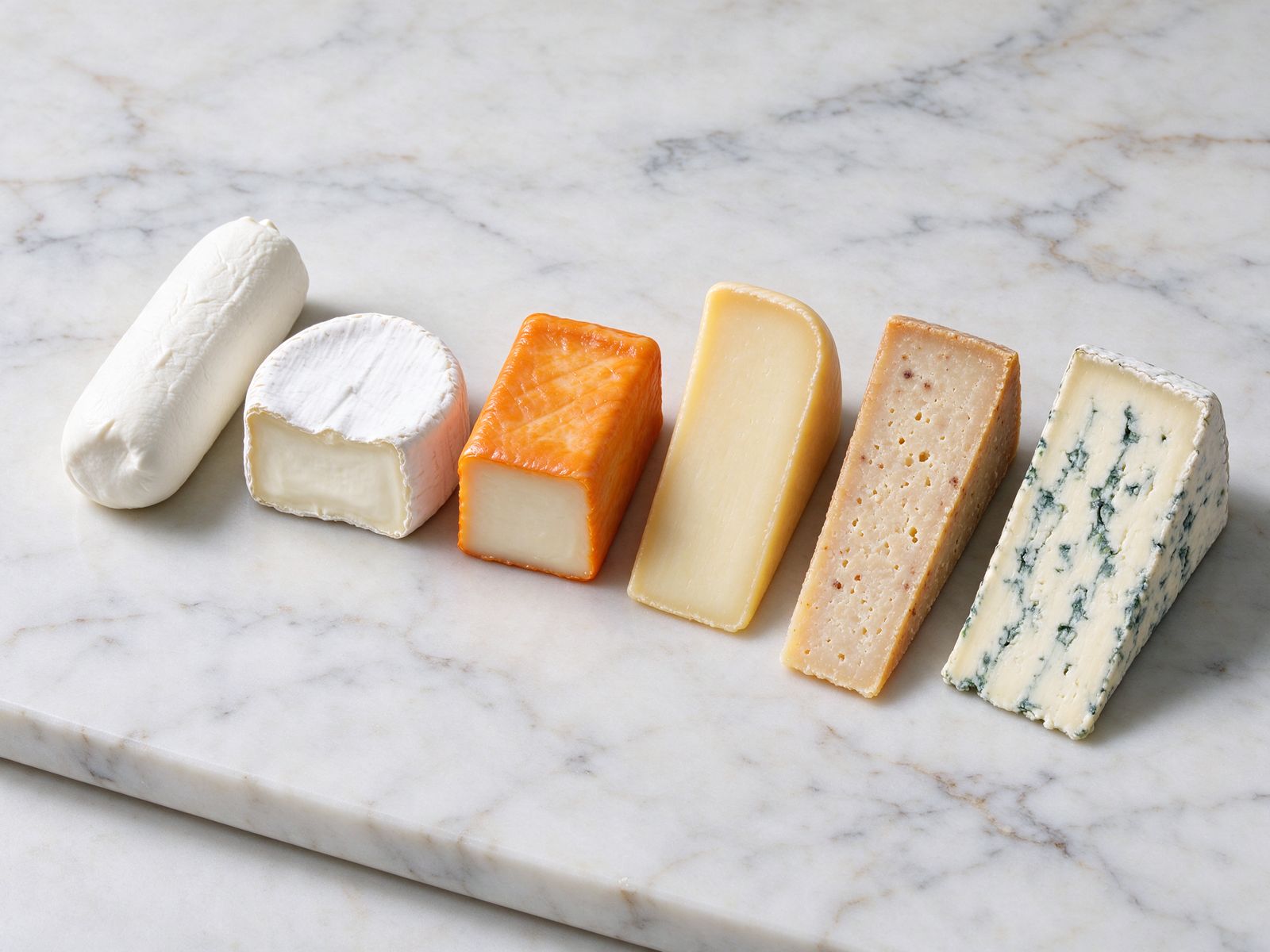
Forget memorising hundreds of names. Moisture, rind and mould sort cheese into six groups, and once you can spot the group you can guess how a cheese will taste, cut, melt and keep. Hover or tap a panel.
Fresh
Milky, tangy and spoonable. Think fresh goat cheese, ricotta, mozzarella and feta-style brined cheeses. Eat it within days of opening.
More on fresh cheeseSoft-ripened
A velvety white mould rind ripens the paste from the outside in, so the edge turns gooey before the centre. Brie and Camembert styles live here.
More on soft-ripened cheeseWashed-rind
Brushed with brine, beer or spirits during aging. The rind smells farmy; the paste is usually milder than the aroma promises.
More on washed-rind cheeseSemi-hard
Pressed curds, a few months of aging, and a texture that bends before it breaks. Young Gouda, Havarti and many tommes fit here.
More on semi-hard cheeseHard
Long aging drives off moisture and builds savoury depth and crunchy crystals. Aged Cheddar, Alpine wheels, Manchego and Parmigiano styles.
More on hard cheeseBlue
Needled so air can feed blue-green mould inside the cheese. Ranges from creamy and gentle to sharp, salty and peppery.
More on blue cheeseRead before you taste
The Anatomy of a Wedge
Before a cheese reaches your mouth, its cut face has already told you most of the story. Learn to read five details and the label becomes a footnote.
- 01Rind. Bloomy white, sticky orange, waxed, clothbound or natural and dusty. The rind type usually tells you the style.
- 02Paste. The interior. Pale and moist means young; deeper colour and a drier, flakier break mean age.
- 03Eyes. Round holes from gas made by certain bacteria, typical of Alpine and Swiss-style wheels.
- 04Crystals. Those crunchy white specks in old Gouda or Parmigiano styles are amino acid and calcium crystals, a normal sign of long aging.
- 05Cream line. The softer, translucent band just under a soft-ripened rind, where ripening has started first.
Five moves
How to Build a Cheese Board That Balances
A good board is a set of contrasts: soft against firm, mild against loud, salty against sweet. Follow these five moves, then try them in the interactive board builder.
- 01
Pick three to five cheeses
Three is plenty for a small table. Past five, flavours start to blur and leftovers pile up. Odd numbers look better on a board.
- 02
Spread them across the styles
Choose from different families: one soft, one firm, one bold. A fresh or bloomy cheese, an aged hard wheel and a blue cover a lot of ground.
- 03
Mix the milks
Cow, goat and sheep milk taste different even within the same style. Goat brings tang, sheep brings sweetness and richness.
- 04
Add sweet, crunchy and bright
Honey or fruit paste for the blue, nuts or crackers for crunch, and something sharp like pickles or apple slices to reset the palate.
- 05
Temper, label and give each its own knife
Pull cheese from the fridge ahead of time so the flavour opens up, set out a separate knife for each, and arrange mild to strong.
The serving ritual
Four Words Between the Fridge and the First Bite
- 01
Temper.
Cold mutes flavour and stiffens texture. Most cheeses taste far better after time out of the fridge, wrapped, before guests arrive.
- 02
Cut.
Follow the shape: wedges from the point to the rind, rounds like a cake, logs in coins. Everyone should get a little rind and a little centre.
- 03
Taste.
Start mild and finish with the strongest. Smell first, then let a piece sit on your tongue for a moment before you chew.
- 04
Pair.
Bring the drink in after the cheese has spoken. Watch whether it softens the salt, cuts the fat or clashes. Then adjust.
Four glasses
Pairing Cheese With Whatever You Like to Drink
Match weight to weight
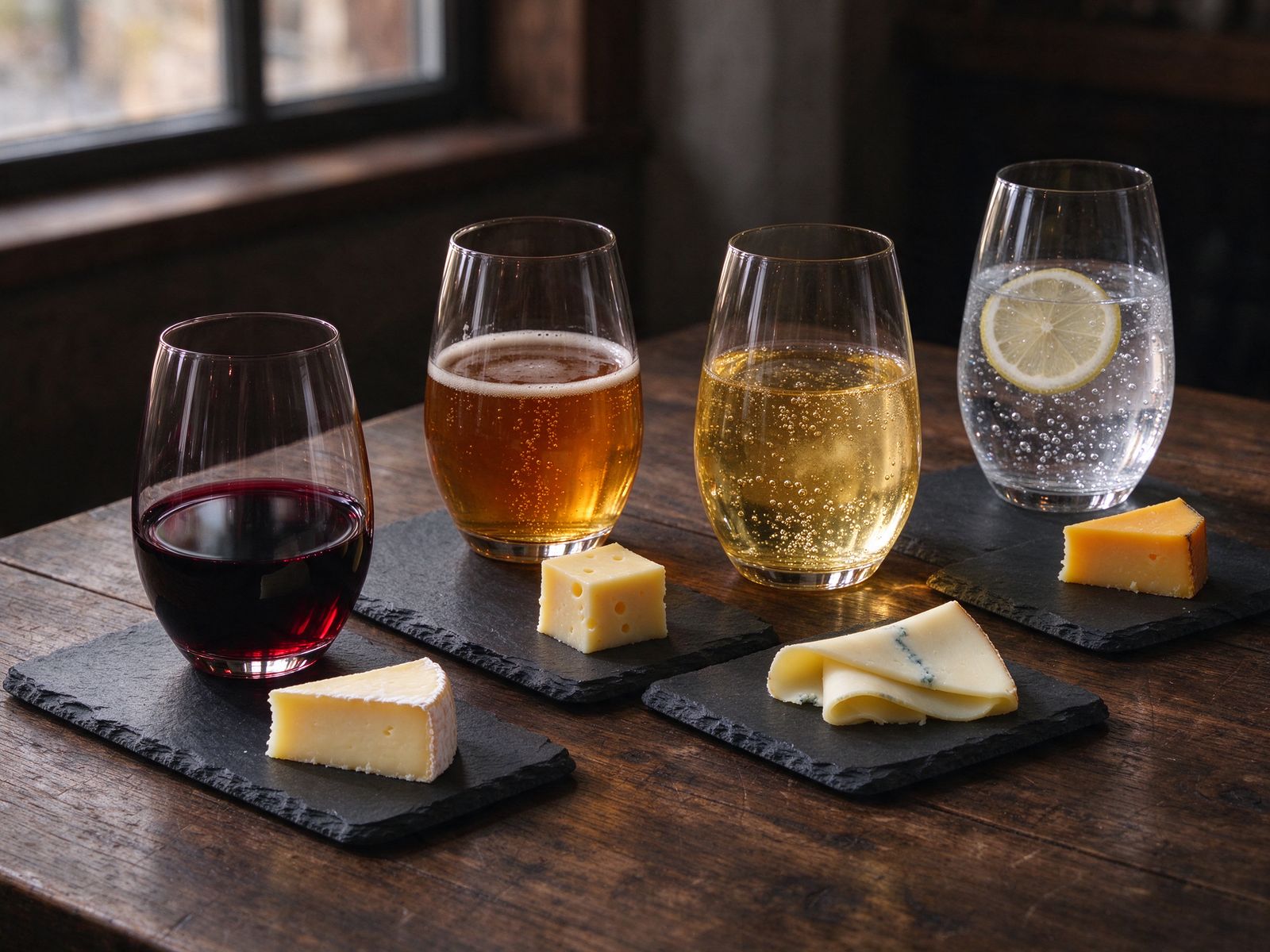
Light, crisp whites with fresh goat cheese; fuller reds with aged hard cheese; sweet wines with blue. Big tannic reds often fight soft, creamy cheese.
Wine pairingsBubbles scrub the palate
Carbonation lifts fat off your tongue, which is why beer is so forgiving. Malty ales flatter aged Cheddar; stouts and porters stand up to blue.
Beer pairingsApple and acid
Dry cider has acidity like white wine and fruit like a chutney. It is a natural partner for bloomy and washed-rind cheeses.
Cider pairingsAcid, bubbles, tannin
Sparkling water with citrus, tart juices, kombucha and strong black tea do the same jobs as wine: cut richness and refresh.
Alcohol-free pairingsParty math
How Much Cheese for Your Guests
The amount depends less on headcount than on the cheese's role. Before a dinner, people nibble. When the board is the meal, they graze for hours. Set your guest count and the board's job.
Seven guides
Every Cheese Guide on Steve's Cheese
Each guide stands on its own, and each one links to the next thing you will probably want to know.
- 01Cheese StylesThe six families: fresh, soft-ripened, washed-rind, semi-hard, hard and blue.
- 02Cheese Board BuilderPlan a balanced board, then build it piece by piece.
- 03Pairing GuideWine, beer, cider and zero-proof matches that work.
- 04Storing and ServingWrapping, fridge zones, tempering and cutting.
- 05Buying CheeseReading labels, milk types, raw and pasteurized.
- 06Cheese for PartiesHow much to buy, with a guest calculator.
- 07Melting CheesesWhich cheeses melt, stretch, brown or sulk.
Questions welcome
Stuck in Front of the Cheese Case?
Send a question about a board, a pairing, a party or a cheese you cannot place. Good questions may shape future guides.